English
  中文简体
中文简体

Industry News
The technical team of Jinbaichen has over 30 years of experience in the research and development of vacuum coating equipment and technological accumulation.


The technical team of Jinbaichen has over 30 years of experience in the research and development of vacuum coating equipment and technological accumulation.
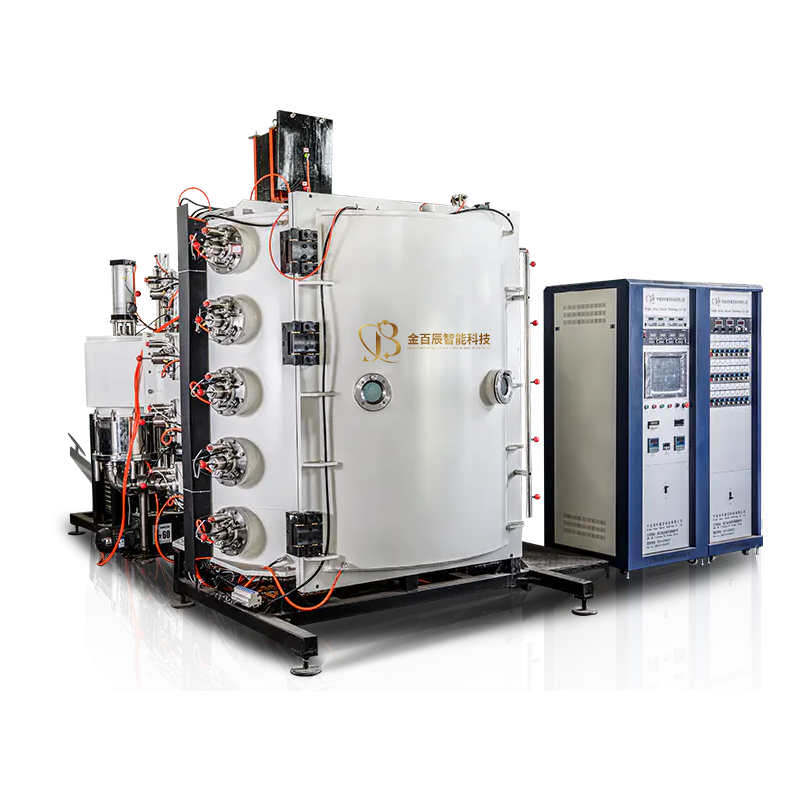
Diamond coatings are widely valued for their hardness, thermal conductivity, and wear resistance. Among the techniques used to deposit diamond films, Microwave Plasma Chemical Vapor Deposition (MPCVD) has gained attention for its precision and adaptability. But an important question arises: what materials can MPCVD Diamond Deposition Coating Equipment actually handle, and how does it affect different substrates?
Understanding MPCVD Technology
MPCVD is a chemical vapor deposition process that uses microwave energy to create a plasma environment, allowing carbon atoms to deposit as diamond on a substrate. The equipment is highly controlled, enabling thin, uniform coatings over complex shapes. Unlike traditional methods, MPCVD allows for diamond growth at relatively lower temperatures, reducing the risk of damaging sensitive materials.
This makes MPCVD Diamond Deposition Coating Equipment suitable for a variety of industrial applications, including cutting tools, electronics, optical components, and biomedical devices. The versatility of the equipment is largely determined by the type of substrate and the desired properties of the diamond layer.
Metals and Alloys
One of the common substrate types for MPCVD diamond coating is metals. Materials such as tungsten, molybdenum, titanium, and stainless steel can be coated with diamond films for enhanced hardness and wear resistance. The coating improves durability, reduces friction, and extends the service life of industrial tools.
Before deposition, metal surfaces often undergo pre-treatment, such as seeding with nanodiamond particles, to improve adhesion. MPCVD Diamond Deposition Coating Equipment is designed to handle these pre-treated metals effectively, ensuring uniform coverage and minimizing defects.
Semiconductors and Electronic Materials
Another important category includes semiconductors like silicon, silicon carbide, and gallium nitride. Diamond coatings on these substrates provide thermal management benefits due to diamond's high thermal conductivity. This is particularly useful for electronics and high-power devices where heat dissipation is critical.
The controlled environment of MPCVD Diamond Deposition Coating Equipment allows precise adjustment of plasma parameters, which ensures compatibility with temperature-sensitive semiconductor materials without degrading their performance.
Ceramics and Composites
Ceramic substrates such as alumina, zirconia, and silicon nitride can also be coated using MPCVD. These materials benefit from enhanced hardness, chemical resistance, and thermal stability after diamond deposition. Composites, including metal-ceramic combinations, are also increasingly used in tooling industries.
Due to differences in thermal expansion between diamond and ceramics, the equipment's temperature and deposition parameters must be carefully controlled. High-quality MPCVD Diamond Deposition Coating Equipment provides this level of control, enabling consistent coatings without cracking or delamination.
Challenges and Considerations
While MPCVD is versatile, not all materials are suitable for direct diamond deposition. Polymers and certain plastics may degrade under plasma conditions, while untreated metals might exhibit poor adhesion. Pre-treatment, surface activation, and careful process optimization are essential to expand the range of compatible substrates.
Another factor is coating thickness. Some applications require thin films for optical or electronic purposes, while others need thicker layers for wear resistance. MPCVD Diamond Deposition Coating Equipment allows adjustment of deposition rate and duration to meet these varying requirements.
So, what materials can MPCVD Diamond Deposition Coating Equipment handle? The answer spans metals, alloys, semiconductors, ceramics, and composite materials, each benefiting from diamond's exceptional hardness, thermal conductivity, and chemical stability.
By controlling plasma conditions, substrate preparation, and deposition parameters, MPCVD systems can deliver high-quality diamond coatings on diverse surfaces. For industries ranging from electronics, this flexibility makes MPCVD an effective choice for enhancing material performance and extending component life.
 Vacuum Coating Equipment Manufacturer